Blender Conference 2016 / 2
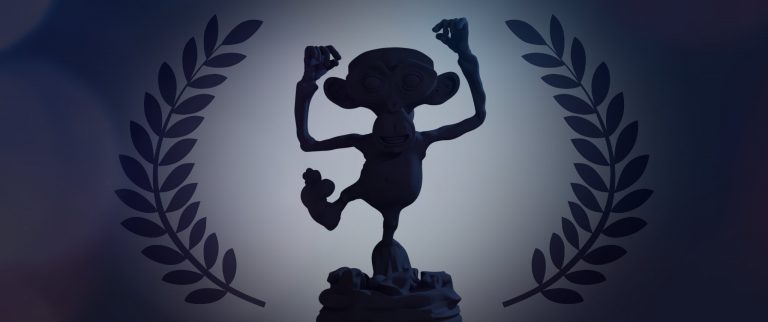
A perpetua memoria della bella presentazione fatta da Daniele e Luigi sulla realizzazione del concept demo video dedicato al virtual studiolo di Isabella d’Este, ecco il video condiviso dalla Blender Foundation

La Blender Conference 2016 sta per iniziare! Ed è tempo che i nostri blenderisti partano alla volta di Amsterdam e del teatro De Balie. Appuntamento sabato 29, ore 15, per assistere in diretta alla presentazione di Daniele e Luigi su Isabella d’Este: Virtual Studiolo – the video

October, it is Blender Conference time! And it is time also for voting for the Suzanne Awards and this year videos. Ati is among them, struggling for being nominated for the final competition with two of her fantastic performances: Experience Etruria After the registration, follow this link to the voting page! Ati and the Mediterranean Paleodiet After the registration, click here to vote! So, friends of Ati from all over the world, register to blender.org and vote! Hopefully with two resounding 5 STARS!

Domani, a partire dalle 18 e fino alle 24, saremo a Palazzo d’Accursio a Bologna in occasione della Notte dei Ricercatori. Troverete: SUPERCALCOLO PER NEGATI Ricostruzioni virtuali, video e ologrammi sull’uso dei super-computer in ambiti diversi, dalla sanità alla meteorologia, dai sistemi informativi alla cultura e VIRTUAL TERRAE MOTUS Quando la tecnologia incontra la cultura, un’applicazione per cardboard Accorrete numerosi!

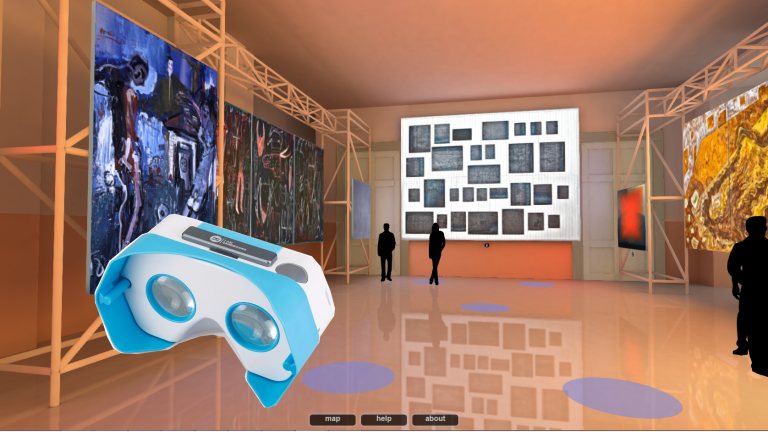
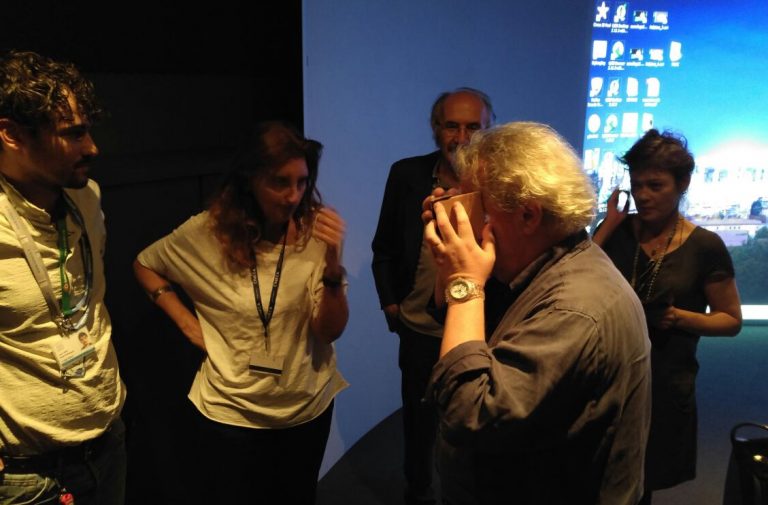
Il 19 settembre è stata presentata in conferenza stampa l’applicazione Virtual Exhibitor, primo frutto della collaborazione tra Cineca e Reggia di Caserta L’applicazione rende navigabile on-line, come semplice pagina Web, la ricostruzione 3D della mostra Terrae Motus, visitabile dal vero presso la Reggia fino al 31 ottobre. Sviluppata in Blender ed inserita nel framework blend4web, permette di muoversi nell’ambiente virtuale senza bisogno di scaricare alcun plug-in. E’ stata implementata una navigazione “punta e clicca” mediante POI (points of interest) ed interrogazione dei metadati mediante pannelli informativi sulle singole opere. E’ stato preferito l’uso dei POI per rendere l’applicazione facilmente adattabile ad una navigazione touch. La versione per Google cardboard, provata ieri anche dal direttore della Reggia, Mauro Felicori, sarà proposta al pubblico durante la notte dei ricercatori, il 30 settembre prossimo, a Roma e Bologna. Nella foto, Daniele immerso nell’applicazione di Terrae Motus su Google cardboard con alle spalle la stessa applicazione nel nostro teatro virtuale.

Abbiamo avuto l’onore di essere selezionati per il Cycles demoreel 2016 con alcuni estratti da Ati e la paleodieta mediterranea e da Experience Etruria: e, al momento, siamo anche la thumbnail del filmato. Evviva!

During the last few months, VisitLab has started to share on Blend Swap some of the 3D models realised for the projects. Until now, 5 items were shared: a white marker board an Etruscan lopas a breakfast table set, mostly from photoscanned models and an assembly line with 4 different machines suggesting the performance of archaeological analysis with X ray; thermoluminescence; carbon dating; chromatography All these models were created for the short educational movie Ati e la paleodieta mediterranea The last model was a Renaissance lute If you are having problems, please use this linkcreated for Isabella d’Este Virtual Studiolo More models will come. So, stay tuned!
Giovedì 5 maggio 2016, alle 11.00 ad ExpoPixel2016, parleremo di Ati e della sua carriera. Dopo 3 corti siamo già alla prima retrospettiva. Brava Ati, a quando il primo Oscar? Vi aspettiamo giovedì all’Opificio Golinelli!

Today at Cineca we are thrilled to host the first research group meeting of a new European project that is going to engage also VisitLab for the next 3 years: I-Media-Cities. The project, whose kick off will take place next month in Brussels, aims at offering to researchers and the general public the access to large documentary film collections from the 19th to the 21st century. A semantic search engine, built on top of already existing repositories, will help find images and shots presenting our European cities through visual interfaces, visual analysis of the components and interactive options. People will also have the possibility of tagging shots and images for sharing knowledge about places, improving the possibility of finding them more easily. These are just some clues about I-Media-Cities. We really hope to offer researchers and general public a useful and interesting tool for delving into an amazing mine awaiting for us in our film archives.

If you are having problems, please use this link In this tutorial you are going to discover how to: use fluids for dropping sealing wax manually animate the spreading of the wax use modifiers to impress a seal define a realistic wax effect Are you longing to get a result similar to the one presented in our demo video? If we have managed to put up a good tutorial, you should be able to. Otherwise, contact us, and we will apologize for our poor communication skills. Let us start. Drops First of all we created 3 UV spheres with different size and shape. One of the spheres was a little bit sculpted in order to modify its shape. The fluid coming from the spheres is initialized with three different starting speeds. The first and second wax drops move a little bit up, along the Z, before going down. In this way, we simulate a diachronic fall. (A possible solution with a movement of the spheres in the domain was discarded as deemed unsatisfactory) Plane The plane is set as an obstacle. Its parameters are shown in the image (no slip). Both plane and spheres are Fluid (physics) Fluid In order to simulate the wax density: base 2, exponent 3 in the viscosity parameters For avoiding excessive spreading of the wax on the paper: Slip type -> no slip To obtain a Slow motion effect: Speed 0.3 After several attempts we discovered that the parameter that suited us better for the Real World Size is 0.4 meters for the domain To obtain a wax-style fluid Smoothing is set at 4 Bake a test simulation with a final resolution of 100-150 to see if there is something wrong. When you get a first result of the wax spreading correctly, bake the definitive version […]